
What a treat!
On a beautiful September day, unusually warm and sunny for the time of year, I headed to The King's Gallery to view The Late Queen's Clothes Exhibition. Our timed entry slot was 11:45am, and thankfully the queue was surprisingly short.
The visit was made even more special because I attended with fellow Stylist Lucy Barrett. Although we'd chatted online for some time and discovered we shared similar views on styling and personal image, we had never actually met in person. Lucy is a Style Coach based in Cambridge and I am based in Hampshire, so this exhibition seemed the perfect excuse to finally meet face-to-face.
For anyone reading this who might want to view Lucy's website, please click here.

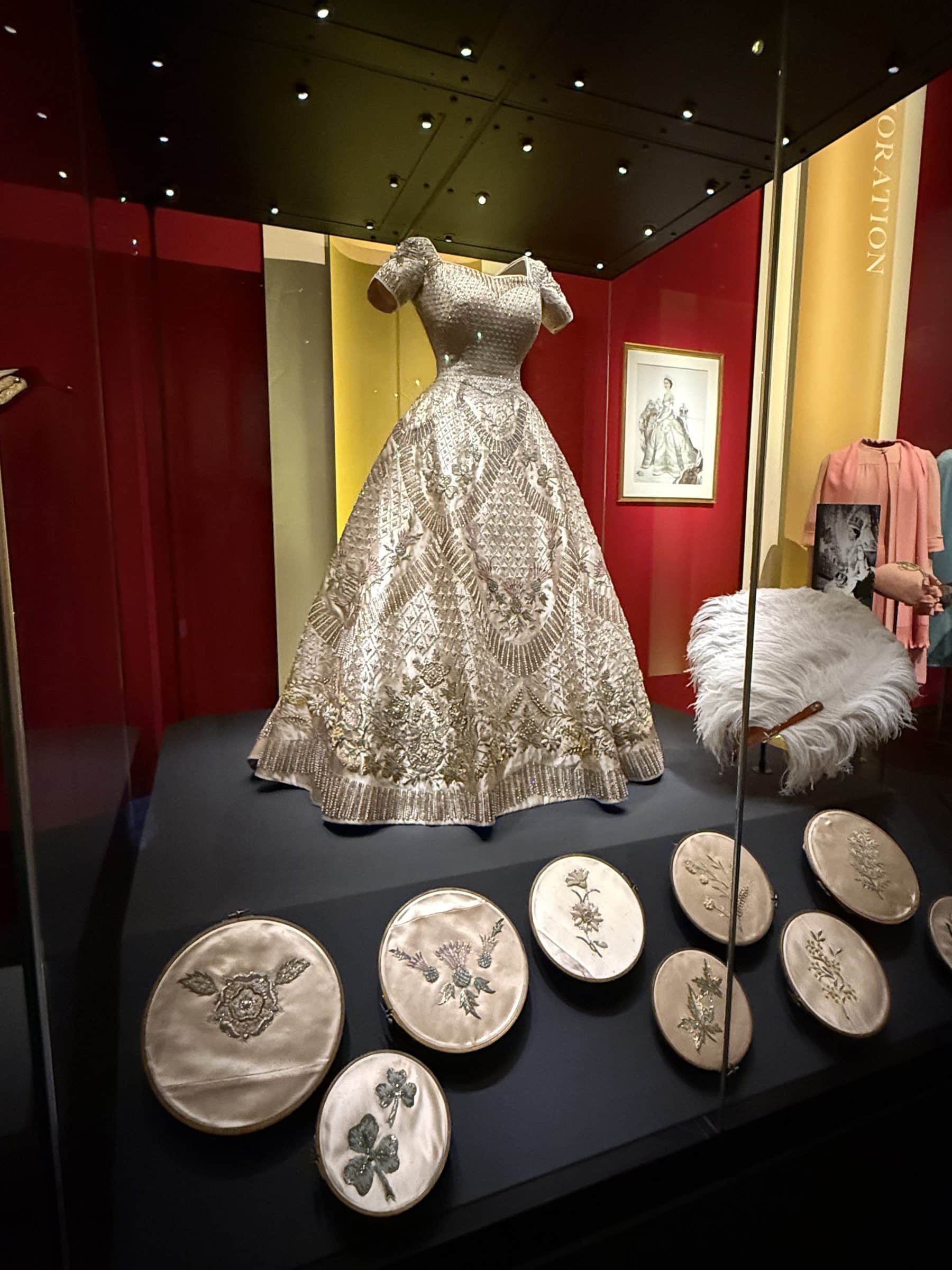
The exhibition featured around 200 garments worn by the late Queen Elizabeth II, spanning her entire life. From a delicate baby gown and Girl Guide uniform to her magnificent wedding dress and ceremonial attire worn for state occasions, it provided a remarkable insight into both her personal style and her public role.
As a Colour and Style Consultant, I couldn't help but look at the collection through a stylist's lens.
My Key Takeaways
COLOUR
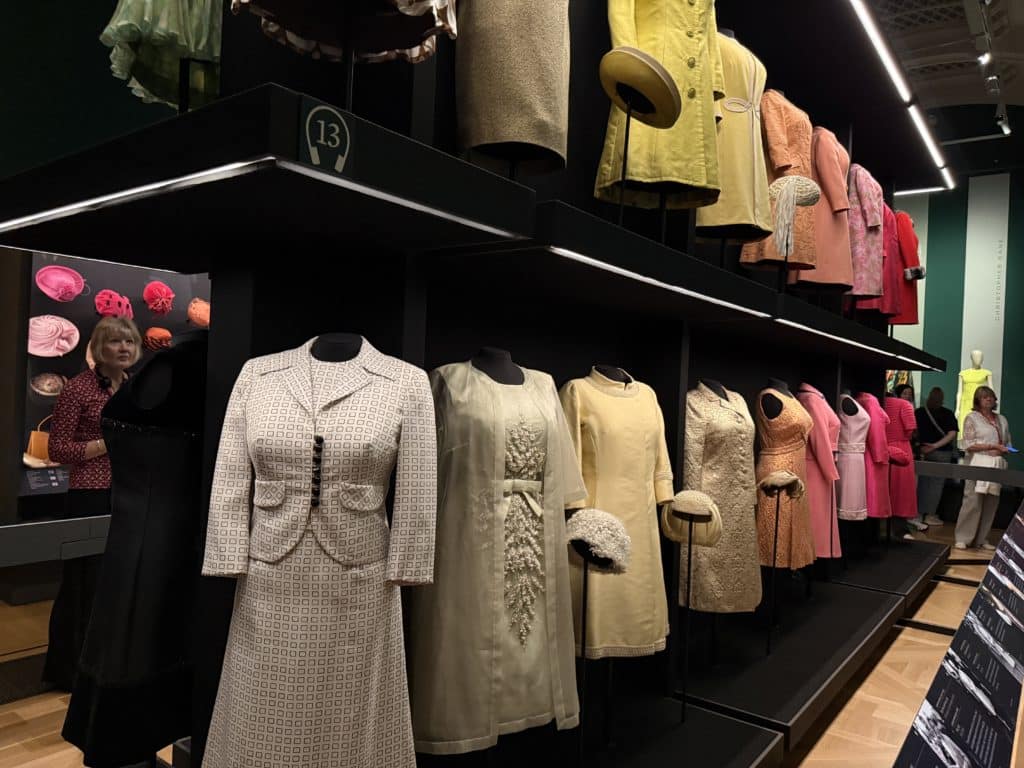
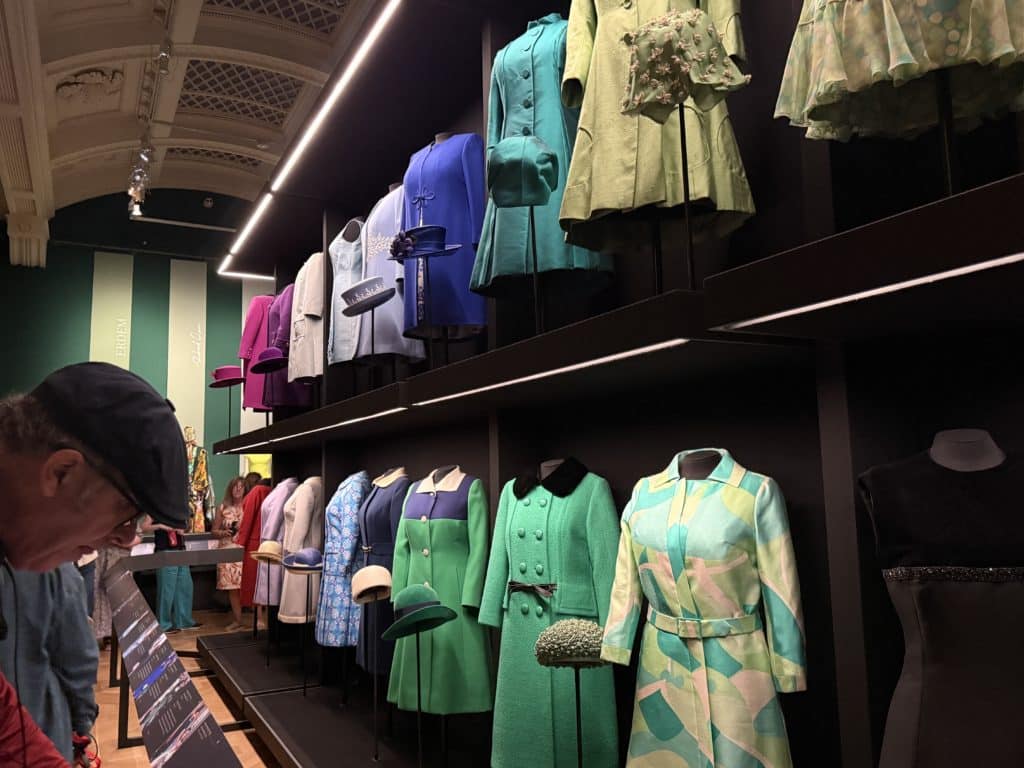
One of the first things that struck me was the extensive use of colour.
There was surprisingly little black, with cream often chosen instead of pure white. In fact, only two gowns in the entire exhibition were black.
The late Queen clearly understood the importance of being seen. Colour helped her stand out in crowds and become instantly recognisable. Famously, she believed that people needed to be able to spot their Monarch from a distance.
What fascinated me most was that many of the colours appeared to be warm-toned. It made me wonder whether she instinctively knew which shades suited her best, or whether those around her understood the principles of colour analysis. Did her dressers advise her? Or did she simply gravitate towards colours she loved and, by instinct, get it right a lot of the time?
For context, colour analysis as we know it today began to emerge in the early 1900s, and the late Queen was born in 1926, so it would have still been quite a new phenomenon early in her life: to understand which colours enhanced one's appearance and why.
STYLE
Style goes far beyond clothing.
It encompasses body shape, proportions, facial features, lifestyle, personality and preferences. The clothes we choose communicate far more than we realise. They reflect our values, confidence, priorities, one's stage of life and dress codes of the day.
This is one reason why I encourage regular wardrobe reviews. As our lives and fashion evolves, our wardrobes should evolve too.
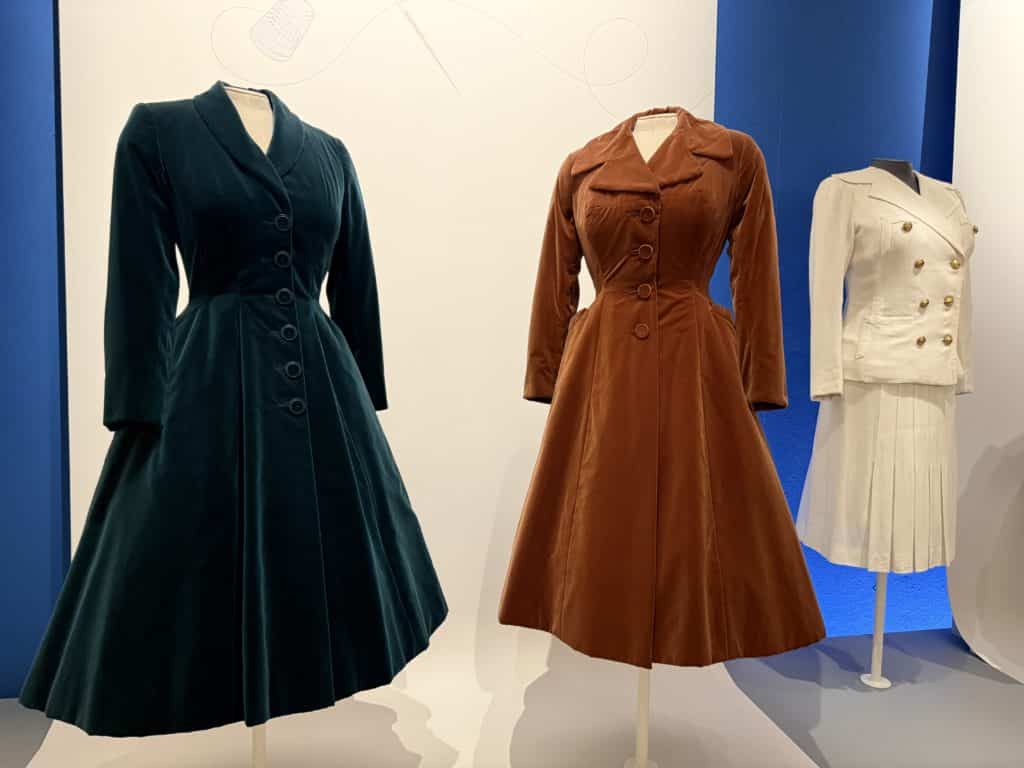
Looking at the late Queen's clothes, I would estimate that she stood around 5'3" at her tallest, which today would place her within the "petite" category. I also noticed the incredibly small waists and armholes on many garments.
Having lived through the Second World War and post-war rationing, she belonged to a generation where food was less abundant and clothing was carefully maintained. Throughout her life she maintained a disciplined approach to both her appearance and self-presentation, qualities I associate with the Classic style personality.
For years I thought that the late Queen's style personality was primarily a blend of:
- Classic, and
- Natural,
and I now think with a touch of
- Romantic, Ingenue or perhaps even Gamine!
CLASSIC
The strongest element, in my opinion, was Classic
The lasting legacy of our late Queen was absolute dedication to her duty as Monarch, Head of State and Head of the Church of England. When on duty, the Queen usually wore a hat. Beyond helping her stand out and appear taller, hats reflected tradition, etiquette and respect for the occasion. Her structured handbags, tailored coats and polished appearance all reinforced this sense of order, proper conduct and refinement.
The hallmarks of a Classic personality are timelessness, elegance and attention to protocol, qualities the late Queen embodied throughout her reign.
The garments themselves were presented impeccably. Every bead, crystal and embroidered detail appeared perfectly preserved. Considering the sheer volume of intricate work involved, this was remarkable.
What I find particularly fascinating about clothing is that it often outlives the people who wore it.
Standing amongst these garments, knowing that the late Queen had once worn every single piece, created an unexpected feeling of connection. History suddenly felt very personal.
NATURAL
Away from official duties, another side of her personality emerged
The late Queen loved horses, dogs and the outdoors. She frequently wore tartan kilts (using a particular Royal tartan created just for her and those Royals or pipers she gave permission to wear it): practical country wear and silk scarves tied around her hair.
The fabrics she favoured were often natural fibres such as wool, cotton and silk.
These practical, comfortable and authentic choices align closely with a Natural clothing personality.
BUT WHAT ELSE?
The interesting question is "what other personality traits surfaced through her clothing choices"?
Was there perhaps a hint of Romantic, Ingenue or Gamine that appeared depending on the occasion?
Romantic
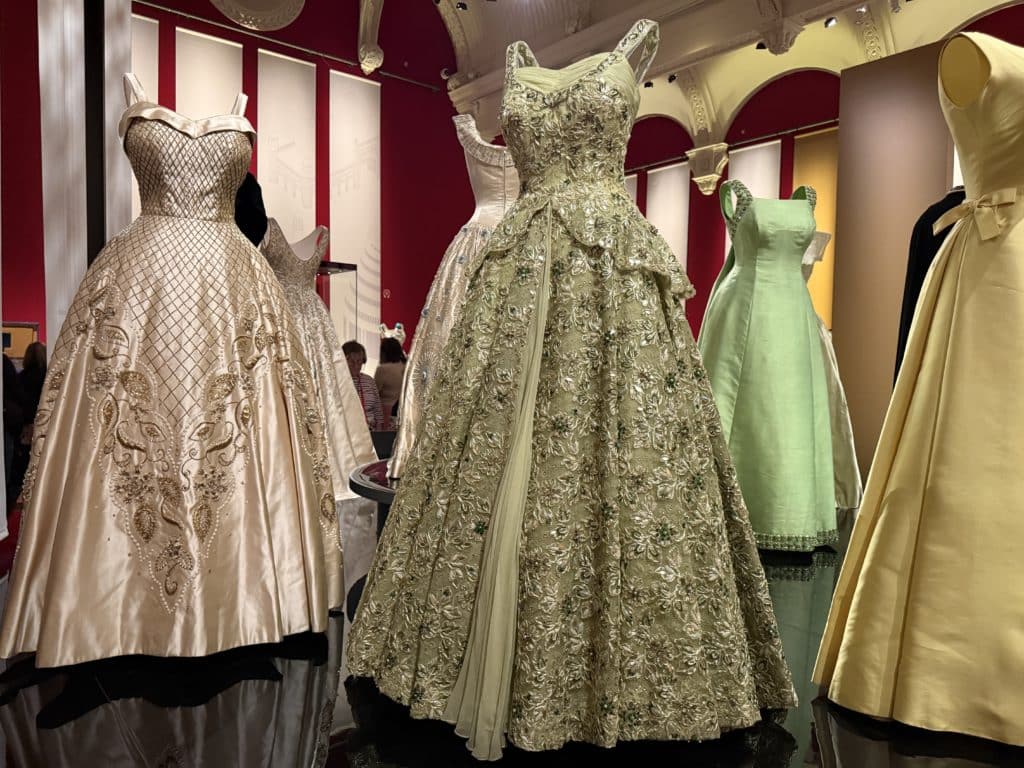
The Romantic influence appeared through the exquisite embellishments found on many evening gowns.
Pearls, crystals, intricate embroidery and, of course, spectacular tiaras added glamour and softness. While many jewels were inherited heirlooms, she clearly enjoyed incorporating sparkle into her look and often worked closely with designers on these details.
INGENUE
I also see traces of Ingenue in her attention to detail and delicate addition of bows.
When visiting Commonwealth and foreign nations, she often paid tribute to her hosts through subtle design elements. National flowers, colours and emblems were woven into embroidery, beadwork and accessories.
Such thoughtful touches demonstrated both charm and consideration, which is also used by the current Queen Camilla and Princess Catherine.
GAMINE
Finally, there were a few unexpected pieces that genuinely surprised me.
Particularly among garments from the 1970s, there were bolder patterns and more playful designs. These hinted at the mischievous sense of humour for which the late Queen became known.
Perhaps these pieces allowed her to express a slightly cheekier side when the occasion permitted. If so, this playful quality feels very Gamine.
Final Thoughts
I left the exhibition with a few personal favourites and found myself wondering which garment had been the Queen's own favourite.
Clothes carry memories. Wedding dresses, special occasion outfits and treasured garments often become connected to specific moments in our lives.
Perhaps some of the late Queen's favourite pieces reminded her of joyful occasions. Equally, there may have been garments associated with more difficult times, such as the year she famously described as her "annus horribilis" in 1992.
The exhibition offered a fascinating glimpse into not only the late Queen's wardrobe, but also her personality, values and life story.
Did you visit the exhibition? I'd love to know which outfit was your favourite. Please leave a comment below.
